Posted by: Michael | 03/13/2019

Establishing Intention

Everyday the news is worse: whether it’s the insect apocalypse or the collapse of the ocean’s ecosystem it looks as if human civilization is doomed. But, if I have the intention of helping to shepherd countless beings across the flood, how is this any different? I have been trying to come up with the right words for an aspiration to change at the end of my formal practice that would encapsulate my bodhisattvic intentions in an epoch of decay and degeneration but have yet to find them. Who would have guessed that magic and aditthana share so much in common?

Anyway, when I think about the hard times that may come I am most preocuppied with maintaining my precepts and alleviating weekday suffering I can. For some time I have been undertaking fasts and cold showers as well as engaging in an exercise régimen in the hopes of being of service when the chips are down. Then again, if anything needs training and preparation it’s the mind.

So, maybe I’m completely crazy but trying to think of ways to be of use during a real or imagined Armageddon gives me some solace. Truth be told, we are all dying here anyway so my efforts to help surely won’t go to waste.

May I keep my precepts pure as a protection for myself and all beings.

May I embody the Dhamma to teach beings by example.

May I never abandon metta or karuna, even at the cost of my life.

Posted by: Michael | 03/12/2019

Not feeling very energized today. Only managed a half an hour sit and made it half way through my precepts before I stopped. It’s no wonder I didn’t handle my wife’s usual criticisms and negativity well. Still, I have to wonder what I was even thinking allowing fatigue and sloth to overcome me? Am I suddenly immortal? Has kamma suddenly ceased working? Surely not.

Today and all days like it are a perfect opportunity to practice viriya parami. For those who are unfamiliar here is an excerpt:

Virya paramita — the perfection of energy — is the fourth of the traditional six (sometimes ten) paramitas or perfections of Mahayana Buddhism and the fifth of the ten perfections of Theravada Buddhism. What is the perfection of energy?

May I always redouble my efforts when I’m adapted by sloth, torpor and fatigue. May I recall the Bodhisatta’s aditthana not to move from under the bodhi tree until the prize was won.

Posted by: Michael | 03/09/2019

A Son’s Flesh

“And how, bhikkhus, should the nutriment edible food be seen? Suppose a couple, husband and wife, had taken limited provisions and were travelling through a desert. They have with them their only son, dear and beloved. Then, in the middle of the desert, their limited provisions would be used up and exhausted, while the rest of the desert remains to be crossed.

The husband and wife would think: ‘Our limited provisions have been used up and exhausted, while the rest of this desert remains to be crossed. Let us kill our only son, dear and beloved, and prepare dried and spiced meat. By eating our son’s flesh we can cross the rest of this desert. Let not all three of us perish!’

“Then, bhikkhus, the husband and wife would kill their only son, dear and beloved, prepare dried and spiced meat, and by eating their son’s flesh they would cross the rest of the desert.

While they are eating their son’s flesh, they would beat their breasts and cry: ‘Where are you, our only son? Where are you, our only son?’

“What do you think, bhikkhus? Would they eat that food for amusement or for enjoyment [99] or for the sake of physical beauty and attractiveness?”

“No, venerable sir.”

“Wouldn’t they eat that food only for the sake of crossing the desert?”

“Yes, venerable sir.”

“It is in such a way, bhikkhus, that I say the nutriment edible food should be seen. 161 When the nutriment edible food is fully understood, lust for the five cords of sensual pleasure is fully understood. 162 When lust for the five cords of sensual pleasure is fully understood, there is no fetter bound by which a noble disciple might come back again to this world. 163

Samyutta Nikaya 12.63

Posted by: Michael | 03/08/2019

None Will Escape Sickness and Death

My two year old woke up last night with a fever again. We are now turning the corner from run of the mill to slightly more concerning. And, yet, why would it not be so? Why should it be different? We are all born into this human realm with our own kamma which will ripen inexorably.

This is not to say that I’m nonchalant about it: I spent the morning reciting the Medicine Buddha mantra, dedicating the merit of my Anapanasati to get and doing tonglen. Would that it were possible to exchange her sickness for my health but that is that the way of the world. All of this had me thinking about the following account of Visakha mother of Migara which I’ll include below. Please dedicate merit to my daughter and may you be well.

Death of a Dearly Loved Grandson

The Udana

Thus have I heard. 

On a certain occasion the Blessed One dwelt at Savatthi, in the eastern monastery, in the pavilion of Visakha-Migaramata. 

Now at that time, the dearly loved grandson of Visakha-Migaramata died. And Visakha-Migaramata went at unseasonable hours, with hands and hair wet (with tears), to where the Blessed One was, and drawing near she saluted the Blessed One and sat down apart. 

And the Blessed One said to Visakha-Migaramata, as he sat there: “Wherefore, O Visakha, do you come here at unseasonable hours, with hands and hair wet (with tears)?” 

“Sire, my dearly loved grandson is dead; that is why I come here, at unseasonable hours, with hands and hair wet (with tears).” 

“Do you find, O Visakha, that there are sons and grandsons in proportion to the number of men in Savatthi?” 

“I find, Blessed One, that there are sons and grandsons in proportion to the number of men.” 

“And how many men of Savatthi, Visakha, die daily?” 

“Sometimes, Sire, ten men of Savatthi die daily, some times nine, eight, seven, six, five, four, three, two; some times, Sire, only one man dies in the day. Of men dying in Savatthi, there is no lack, Sire.” 

“What think you, Visakha; have you found at anytime or anywhere, men whose garments have been unwetted (by tears), whose hair has been unwetted (by tears)?”

“Not so, Sire; how is that possible with so many sons and grandsons?” 

“Those, Visakha, who have a hundred dear ones, have a hundred sorrows. These who have ninety dear ones, have ninety sorrows. These who have eighty dear ones, have eighty sorrows etc. Those who have one dear one, have one sorrow. Those who have no dear one, for them there is no sorrow. These, I declare, are the griefless ones, free from human passion, without despair.” 

Whatsoever of sorrow, lamentation and pain is in the world, 
All this arises from clinging, where clinging is not, these are not. 
Therefore happy and sorrowless are those who cling not to anything in the world. 
Set not your affections on things on earth.


Posted by: Michael | 03/07/2019

By My Own Hand

[In the home] there is quarreling and fighting. They do not separate, and there is always unhappiness and disharmony in their lives.

You may feel trapped in a heavy, awful situation of this kind and believe you have no escape; you may believe that the circum-stances are difficult or impossible to change. Though you may not be able to change the external circumstances, you can change how you use your mind.

One very effective thing you can do is to think: “All these problems have been given to me by my self-cherishing thought.” Give all these problems back to your self-cherishing thought. And then decide to experience your problems on behalf of others. This is the bravest, most powerful practice you can do.

[…]

Excerpt from: “Transforming Problems into Happiness” by Thubten Zopa.

Although it took me considerable mental gymnastics to understand the gist of this teaching it seems to me that it boils down to the fact that tanha (craving) for the pleasant is at the root of all the problems i experience. And this tanha is not amorphous and non-local but it arises with the delusion of self. I crave and then pass through the steps of dependent origination until I am reborn into suffering. This tanha and delusion along with the other defilements are my self-cherising thoughts and unless I take string measures to counteract then and supplant them with the brahmaviharas this suffering will continue unabated.

May I experience these problems for the benefit of all. May I ever recall that my suffering is the result of my own actions both now and in the past. There is no one else to blame and no one worthy of contempt.

Posted by: Michael | 03/06/2019

Happy Uposatha – Praise and Blame

Kodhavagga · Gātha 227

Porāṇametaṃ atula netaṃ ajjatanāmiva
Nindanti tuṇhimāsīnaṃ nindanti bahubhāṇinaṃ
Mitabhāṇimpi nindanti natthi loke anindito

Anger · Verse 227

This, O Atula, is an old saying; it is not one of today only: they blame those who sit silent, they blame those who speak too much. Those speaking little too they blame. There is no one who is not blamed in this world.

English translation by Ven. Narada Maha Thera. For free distribution only.

My wife came home in tears today because of criticisms she’s received at her training hospital. I tried my best to help, telling her she doesn’t have to believe the criticisms of they’re completely off base and how she can use them to better herself is there’s some truth. I said that’s what I do with her daily criticisms of me and it keeps my head above water.

This may have been a bridge too far, however, because she said that my abilities to do so is indicative of the fact that I have a “chip loose” easyJet than a conscious strategy. The irony of responding critically to my attempt to help her deal with criticism was lost on her but I took that as my cute to stop offering unwanted advice.

Maybe she’s right that I have a screw loose but I can tell you that being constantly criticized never feels good. Still, I’m fortunate enough to have the tools to deal with it effectively and to turn it into a whet stone for my character. May blame least my wife to the Dhamma and onward to full enlightenment.

Posted by: Michael | 03/05/2019

Training the Mind

You can’t scold the mind into changing, especially when dealing with entrenched mental patterns like forgetting and mind-wandering.

Upasaka Culadasa

Posted by: Michael | 03/04/2019

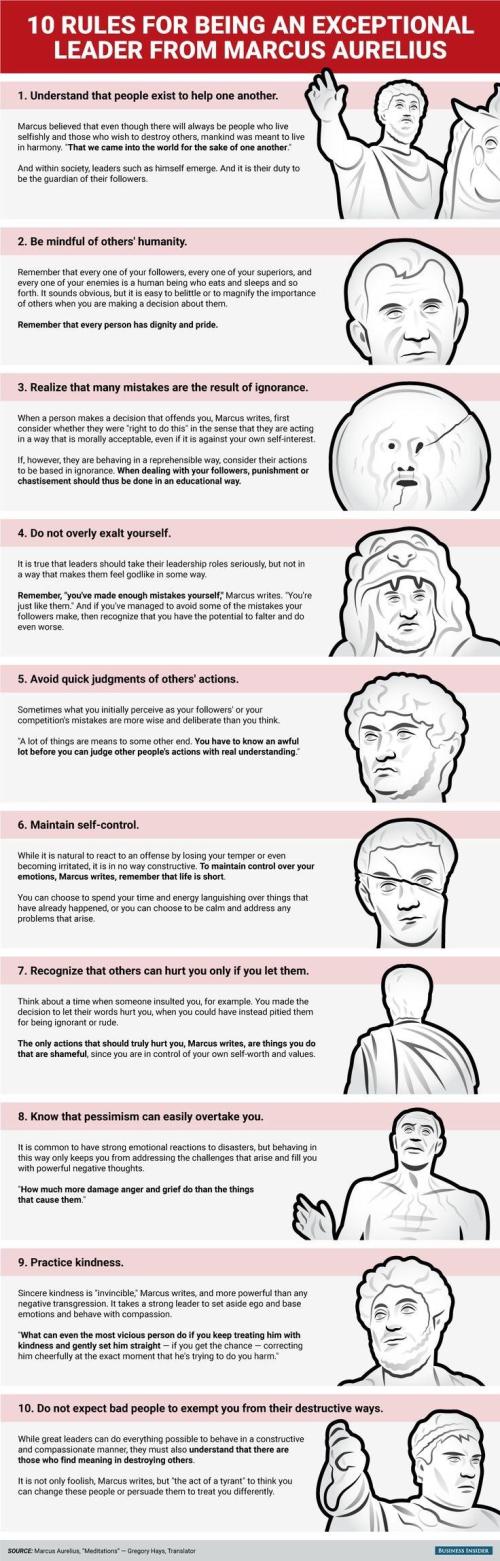
Marcus Aurelius

I just stumbled upon this and think it’s a great reminder of core principles to live by. I’m always amazed by just how close the Stoics got to the Dhamma and it may be no coincidence at all possibly thanks to Greco-Bactrian contacts early on. Who knows though really.

Stoicism


Posted by: Michael | 03/04/2019

Keep Going

When our meditation goes well, we keep going. When it doesn’t, we keep going. Whatever happens—pain or pleasure, extreme doubt or bliss—we keep moving forward.

Excerpt from: “Change of Heart: The Bodhisattva Peace Training of Chagdud Tulku” by Lama Shenpen Drolma.

Posted by: Michael | 03/01/2019

Covetousness and Avarice

“He who is not contented with what he has, would not be contented with what he would like to have.”
― Socrates

I’ll catch myself sometimes complaining in thought about the size of my apartment. Somewhere during this I’ll then think about friends and acquaintances who have larger, nicer homes and I feel a sense that I haven’t succeeded as a husband and father. This can, at times, be exacerbated by my kids’ and wife’s vocal protestations about our cramped living quarters. In fact, my wife is constantly looking at real estate, fantasizing about better digs.

But, when I stop to think about it, what really is lacking? We have a safe home where we can eat, sleep and relax. If we had more money we could spend more of it on a bigger place but what would that do in the end? Would we all suddenly become happy and contented? Some problems would go away and new ones would arise. That’s it.

I am still trying to practice gratitude and it has helped me to see my greed and discontent more clearly. May we all learn to use and be content with our circumstances.

« Newer Posts - Older Posts »

Categories

Brightening Futures of Zanzibar

Improving Lives through Generosity

Shillelagh Studies

A hub for the music, culture, knowledge, and practice of Irish stick-fighting, past and present.