Posted by: Michael | 01/02/2021

New Year’s Day

It’s the first day of 2021 and I don’t have much to say about it. Today, I was able to dwell in gratitude for my blessings, specifically for my family and my good fortune to be able to support them. I was able to meditate and do most of my physical conditioning routine despite having slept in with my wife and daughter. I was able to give a little more of myself and my time than I am accustomed to doing because I saw the value in it and didn’t think it was appropriate just to pursue my own betterment. And, when I considered it, I realized that pursuing my own welfare was no different than pursuing theirs.

One big thing that occurred to me today was that I want to use my life as a father and husband to bring joy to these people. I want to do things with my time and money that make my wife and children happy. Rather than holding back and worrying about not having enough, I want to be a cause of mundane joy and then I want to bask in mudita. Naturally, there is a balance that needs to be struck but today, this first day of the yea, was a good day and I am thankful.

Posted by: Michael | 12/31/2020

Memorizing the Dhammapada

I train nearly everyday to physically prepare myself for collapse. I try to read up on survival medicine, foraging techniques, shelter building, etc. to prepare for the same and yet, I am doing precious little to preserve the flame of wisdom. For some time, I have wanted to memorize key suttas but if I had to pick one complete book the Dhammapada would be it. So, every day I intend to memorize a verse. There are 423 verses in the Dhammapada meaning that I should spend about a year and a half on this project. I am going to use the technique outlined below:

Daily Procedures

Priority of reviewing old verses: Always give priority in your mind to the retaining of old verses even over the learning of new ones. What’s the point in going on to new ones if you don’t hold onto the old? This doesn’t mean you should re-memorize the old ones… just that you should begin every day’s work with review of old verses. Look on that as what you need to do to earn the privilege of acquiring some precious new verses. (Work before play!)

Repetition over time: Saying a verse 100 times in one day is not as helpful as saying it every day for 100 days. The absolute key to successful Tipitaka memorization is repetition over a long time period. This is how you retain old verses while learning new ones.

Memorizing the verse numbers: An important note is that it is well-worth the extra effort to memorize the verse numbers / paragraph and structural information as if they were part of each verse/paragraph. This will help prevent you from dropping out verses or even whole paragraphs when you’re reciting the book all the way through. It will also help you in being able to pick individual verses out to quote them. Finally, it will help you to be able to recall the verses as you are reading Buddhist books that cite them… you won’t have to look them up! Dhammpada 1:1-3’s verse numbers would be said like this (if you learn them in pali): “Yamakavagga-One. Manopubbangama dhamma …; Yamakavagga-two Grace manopubbangama dhamma….” DON’T SHORT-CUT THIS DISCIPLINE!! It actually makes memorization easier in the long run!

Photographing the verses with your eyes: Memorization is partly visual. This is not to say that blind people can’t memorize the Tipitaka, but just that the memorization process is connected very closely to the eye. Read each new verse ten times, covering each words as though photographing it with your eyes. I can still remember where some particular verses were on the page of the Tipitaka I first used to memorize them. Burn each verse into your brain with your eyes.

Say it out loud: Another help in memorizing is to say the verse out loud to yourself. The additional sensory input to your brain helps the memorization process. It doesn’t have to be very loud, just loud enough so you can hear it. Also, try putting some feeling and interpretation into reciting the verses… this is actually a form of meditation on the verses as you are learning them.

Sample daily procedure: The following is an example of how someone could go about memorizing Dhammapada at the rate of one verse per day:

1) Day one: Read Dhammapada 1:1 out loud ten times, looking at each word as if photographing it with your eyes. Be sure to include the verse number. Then cover the page and recite it ten times. You’re done for the day.

2) Day two: Yesterday’s verse first!! Recite yesterday’s verse, Dhammapada 1:1 ten times, being sure to include the verse number. Look in the Tipitaka if you need to, just to refresh your memory. Now, do your new verse. Read Dhammapada 1:2 out loud ten times, looking at each word as if photographing it with your eyes. Be sure to include the verse number. Then cover the page and recite it ten times. You’re done for the day.

3) Day three: Yesterday’s verse first!! Recite yesterday’s verse, Dhammapada 1:2 ten times, being sure to include the verse number. Again, you should look in the Tipitaka if you need to, just to refresh your memory. Old verses next, altogether: Recite Dhammapada 1:1-2 together once, being sure to include the verse numbers. Now, do your new verse. Read Dhammapada 1:3 out loud ten times, looking at each word as if photographing it with your eyes. Be sure to include the verse number. Then cover the page and recite it ten times. You’re done for the day.

4) Day four: Yesterday’s verse first!! Recite yesterday’s verse, Dhammapada 1:3 ten times, being sure to include the verse number. Again, you should look in the Tipitaka if you need to, just to refresh your memory. Old verses next, altogether: Recite Dhammapada 1:1-3 together once, being sure to include the verse numbers. Now, do your new verse. Read Dhammapada 1:4 out loud ten times, looking at each word as if photographing it with your eyes. Be sure to include the verse number. Then cover the page and recite it ten times. You’re done for the day.

This cycle would continue through the entire book (chapter of your choie). Obviously, the “old verses altogether” stage will soon swell to take the most time of all. That’s exactly the way it should be. The entire first book of the Dhammapada can be read at a reasonable rate in less than fifteen minutes. Therefore, the “old verses altogether” stage of your review should not take longer than that on any given day. Do it with the Tipitaka ready at hand, in case you draw a blank or get stuck… there’s no shame in looking, and it actually helps to nail down troublesome verses so they will never be trouble again. Therefore, your 21th day should look like this:

21) Day sixty: (eight days off in that span means you’re on your 19nd new verse, which would be Dhammapada 1:20) Yesterday’s verse first!! Recite yesterday’s verse, Dhammapada 1:20 ten times, being sure to include the verse number. Again, you should look in the Tipitaka if you need to, just to refresh your memory. Old verses next, altogether: Recite Dhammapada 1:1-1:20 together once, being sure to include the verse numbers. LOOK IN THE TIPITAKA IF YOU NEED TO, SO THIS PROCESS WON’T TAKE TOO LONG!!! Now, do your new verse. Read Dhammapada 1:20 out loud ten times, looking at each word as if photographing it with your eyes. Be sure to include the verse number. Then cover the page and recite it ten times. You’re done for the day.

Long-Term Retention

Assuming you continue this procedure in Dhammapada with no missed days (other than your one day off per week), you should be done with the chapter one to nine in 26 weeks. When you have learned Dhammapada 128, “Papavagga 9:12. Neither in sky nor in mid-ocean..” you should stop to celebrate!!!

But after your celebration is done, you need to get back to work. If you have done the “old verses altogether” stage faithfully, this next stage should not be overly burdensome, even though it may seem like it will. RECITE THE ENTIRE BOOK FROM MEMORY FOR 100 CONSECUTIVE DAYS. If you have done your work well, after about the second week you probably won’t even need the Dhammapada anywhere near you while you do this. Thus, you can do this step while in the shower, while driving, while washing dishes, while walking down the road, while exercising… IT WILL ADD NO EXTRA TIME TO YOUR BUSY SCHEDULE!! What is more, it is in this stage that you begin to see the scope of the entire book of Dhammapada (or whatever book you have memorized). You will see large themes that unite chapters together, you will see the flow of the argument, you will discover new things that you never knew before.

Be tough with yourself… 100 days without missing a single one! You can do it, and you’ll be glad you did.

When that is over, then stick the book in a slot (Monday morning, let’s say), and recite on Monday morning for the rest of your life. You will never forget it. However, don’t forget to weed the garden… as I will describe now:

“Weeding the garden”: As you recite a book over a long period of time without looking at the Tipitaka, you will gradually being to make little mistakes or leave verses out. Again, this is why memorizing verse numbers is so essential!!! However, to “weed the garden,” simply take one of your Monday morning times after the 100 days (perhaps every other month) and just read the book by sight all the way through. This will correct errors… this will “weed the garden.”

Now, you are ready to memorize your next book!!!

I will be using Acharya Buddharakkhita’s version of the Dhammapada. Please find day one here:

1. Mind precedes all mental states. Mind is their chief; they are all mind-wrought. If with an impure mind a person speaks or acts suffering follows him like the wheel that follows the foot of the ox.

Posted by: Michael | 12/28/2020

Favors

How many favors have been done for me that I have never acknowledged, let alone taken the time to thank the one who has done them? I owe an almost infinite debt of gratitude to my parents of course but there are dozens of teachers, friends, relatives and acquaintances who have done me millions of small favors. I resolve not to never allow myself to overlook even the smallest or seemingly insignificant act of generosity or kindness.

Posted by: Michael | 12/27/2020

Don’t Spoil It

How often have I spoiled an occasion by immediately chasing after the next desideratum without even pausing to give thanks for that which I have already received. I would like to blame my misapprehension of the Lord Buddha’s exhortation not to be attached to anything but we can see how quickly that falls apart: the Lord Buddha never recommended we follow the infinite forms of craving and that is precisely what I’m doing.

I keep coming back to the ideas of appreciation, contentment and gratitude because I feel a marked absence of these qualities in my heart. In fact, my mind is disposed to complain at all times even if I am successful in keeping complaints from dribbling out of my mouth. Even now I feel an internal wail of desperation rising up within me; a desire to surrender to being lost, hopeless and craven. And, yet…

At least I have the teachings of Lord Buddha to set out right from wrong. At least I have the writing of sages and wise men and women to keep nudging me back in the path. Just because I can’t yet see how the path will arrive at the destination doesn’t mean that it will not. I may not understand how to practice contentment or gratitude but I will keep trying, experimenting and aspire to it. As Lord Buddha said in the Dvedhavittakka Sutta:

Whatever a monk keeps pursuing with his thinking & pondering, that becomes the inclination of his awareness.

-MN19

So, I will keep pursuing, thinking and pondering on gratitude.

Every good blessing to you!

Posted by: Michael | 12/26/2020

Samatha

Muddy Water In Glass stock photos and royalty-free images, vectors and  illustrations | Adobe Stock

Recently, I have been passing through a period of severe fatigue coupled with a fault of willpower. Perhaps I was pushing myself too hard. Perhaps I wasn’t eating right. Perhaps I was overdoing it on the caffeine but for whatever reason I have had to scale back my multiple regimens and start anew with less ambitious goals.

What I have found is that by being so busy and burdening myself with so many checkboxes to tick, I have become dry and miserable. I have spent all of this time preparing to live and not nearly as much living. Yes, it is important to push oneself and pain is a necessary part of growth but a slow and constant grinding down without time to recover does no one any good.

Take my mind, for example. This afternoon it was a mess; awash in myriad anxieties, longings, half-formed daydreams and aborted intentions. So, rather than try to “metta” or “maranam” it all away I sat with it while I counted breaths and, miracle of miracles, it all began to sort itself out like grains of sand in a water glass. All of that sand will one day need to be emptied out by wisdom and discernment but for now I’ll take the samatha.

Posted by: Michael | 12/24/2020

Daily Prayer of Gratitude

I am grateful that a Buddha was born into the world.
I am grateful
that he has taught the Dhamma.
I am grateful
that the Teachings have survived.
I am grateful
that there are yet followers of the teachings.
I am grateful
for my favorable conditions to practice the Dhamma.

I am grateful to have been born a human being.
I am grateful to have been born in a land where I may practice my beliefs.
I am grateful to have been born with faculties intact.
I am grateful to have been born into lifestyle that is not harmful or wrong.
I am grateful to have cultivated faith in the Dhamma-vinaya.

I give thanks for the blessing of this earth I have been given.
I give thanks for the measure of health I have been given.
I give thanks for the family and friends I have been given.
I give thanks for the community I have been given.
I give thanks for the teachings and lessons I have been given.
I give thanks for the life I have been given.

I give thanks to the people, animals, plants, insects, creatures of the sky and sea, air and water, fire and earth, all whose painful exertion blesses my life every day.


I give thanks for the care and labor of a thousand generations of elders and ancestors who came before me.

May I dedicate the merit of my practice and any other merit I make to all beings that they may live happily and in peace and quickly come to the end of suffering.

Posted by: Michael | 12/21/2020

Irritation

This morning, despite waking up early with the best of intentions, I was not strong enough to overcome the waves of nausea and fatigue that swept over me. Perhaps it was the combination of vitamins I took, but soon after ingesting them I had the distinct urge to vomit.

I pushed myself through meditation and Tai Chi standing practice but I gave in and slept for an extra ten minutes. And, rather than walking the seven miles to work with a heavy pack as I had planned, I opted instead for the 2.5 hike to Wall Street.

It may have been the disappointment, but irritation, disgust and nihilistic thoughts have been besieging me all morning. And, come what may, I know that, at the very least, I should keep my mouth shut and not make any resolves until this pernicious state passes.

Posted by: Michael | 12/21/2020

Day of Rest

I have been experimenting with a physical, mental and spiritual conditioning routine that goes heavy on the the first two (physical and mental conditioning) for five days of the week and includes two days of rest. This week those days turned out to be Friday and Sunday. I have yet to decide if that is going to be a regularly scheduled event (it seems likely it will) but it is clear that I need days of rest.

So clear, in fact, that I have spent most of the day (after helping pack up my dojo into storage) lounging and sleeping intermittently. I am thankful to be able to rest in the absence of my children and wife while simultaneously feeling guilty for such a pleasure.

What is strange and a definite source of dukkha is this drive to “do something productive.” Whether that means training to in martial arts, cleaning the house, doing the laundry, reading up on survival medicine or to meditate. This drive to use my time constructively seems to be a source of suffering in itself when not carefully directed. Perhaps by channeling it correctly towards the development of skillful qualities I can take kama-chanda and turn it into dhamma-chanda.

Suffice it to say, however, that to truly rest is a skill I still need to develop.

Posted by: Michael | 12/20/2020

Discipline

Some days are harder than others and it seems that today is one of them. I have managed to tick off nearly every thing on my conditioning routing except for the most important ones: Dhamma Study and an hour and a half of meditation. How have I managed it? By being taken in by the allure of sense pleasures. And, even if I haven’t yet succumbed my mind has been reoccupied and inflamed by them all day long. As a result, I have daydreamed much of the day away in irresolute dissipation.

Thank goodness I have formed a habit of trying to adhere to my resolves or I would likely never have come to write here and put the brakes n my backsliding.

Posted by: Michael | 12/18/2020

Gratitude and Suffering

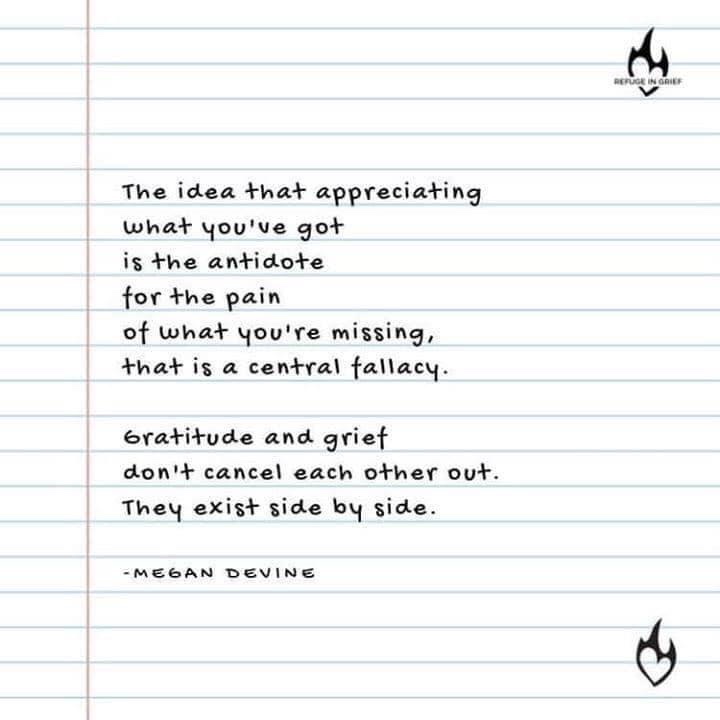
A friend just posted the following quote:

And, although I think it is right in ultimate terms, it is seems to be wrong-headed and poor advice to give anyone who is suffering.

In my understanding of Buddhist psychology it is taken as a given that one cannot attend to more than one phenomenon simultaneously. In that regard, anything wholesome has the effect of knocking the unwholesome out of one’s immediate perceptual apprehension. However, the so-called asavas, more or less habitual tendencies to create suffering, are still there in potentiality. So, gratitude does not put an end to grief (only wisdom can do that), but it certainly provides a respite.

I experienced this very thing last night when I was struggling to complete my physical conditioning routine and, even more clearly, this morning during my twenty-five minute session of Tai Chi standing meditation. I purposefully used gratitude as an antidote to intense physical pain by reflecting on such things as:

“I am fortunate to have met with this practice.”

“I am grateful that this body is still whole and healthy. “

“It is a precious thing to be able to feel pain.”

And, believe it or not, this helped to take me out of the pain, however briefly, and allowed me to cultivate contentment. So, no, gratitude isn’t the final answer, but for world kings like myself, it can be a much needed stepping stone.

« Newer Posts - Older Posts »

Categories

Brightening Futures of Zanzibar

Improving Lives through Generosity

Shillelagh Studies

A hub for the music, culture, knowledge, and practice of Irish stick-fighting, past and present.