Posted by: Michael | 07/10/2023

Anticipated Suffering

There are more things, Lucilius, likely to frighten us than there are to crush us; we suffer more often in imagination than in reality.

Seneca, Letters from a Stoic

Speaking with my son on the way back home on the train, I had occasion to share the quote above. I had often seen it quoted but had never felt the need to ponder it more deeply or share it. At that moment, however, it seemed particularly apt.

Aside from the forms of dukkha explicitly mentioned in the Dhammacakkapavattana Sutta, there are also three more derivative categories of suffering:

  • Dukkha-dukkhaaversion to physical suffering – this includes the physical and mental sufferings of birthagingillnessdying; distress due to what is not desirable.
  • Viparinama-dukkhathe frustration of disappearing happiness – this is the duḥkha of pleasant or happy experiences changing to unpleasant when the causes and conditions that produced the pleasant experiences cease.
  • Sankhara-dukkhathe unsatisfactoriness of changing and impermanent “things” – the incapability of conditioned things to give us lasting happiness. This includes “a basic unsatisfactoriness pervading all existence, all forms of life, because all forms of life are changing, impermanent and without any inner core or substance.”[28] On this level, the term indicates a lack of lasting satisfaction, or a sense that things never measure up to our expectations or standards.
https://en.m.wikipedia.org/wiki/Du%E1%B8%A5kha#:~:text=Birth%20is%20du%E1%B8%A5kha%2C%20aging%20is,what%20is%20wanted%20is%20du%E1%B8%A5kha.

I suppose that anxiety and worry are viparinama-dukkha although I never really took the time to clarify that for myself.

Strange, now that I think about it not to have done so. I suppose I really only ever thought of restless and remorse as a part of the five hindrances and didn’t get too concerned with the their nature as dukkha.

I think there is a lot more to flesh out here but it is obvious that, for Seneca at least, there is no further escape from suffering. No Nibbana for the Stoic Sage unfortunately.

As a post script, I thought I would include this Sutta which I came across during this morning’s Dhamma study. Very unexpected but incredibly apropos: https://suttacentral.net/sn22.7/en/sujato
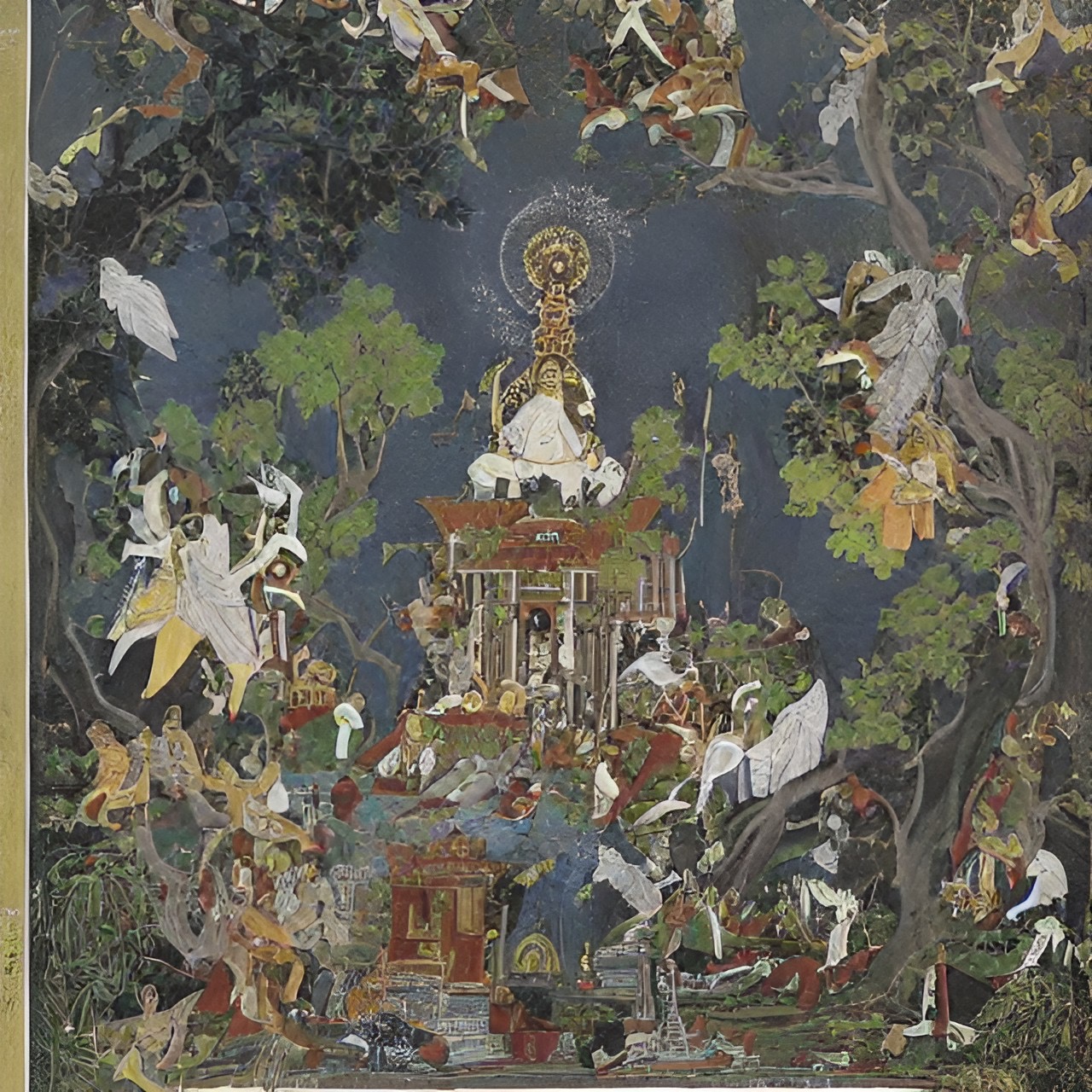

Posted by: Michael | 07/09/2023

Yamakavagga, Verse 3

Akkocchi mam avadhi mam
ajini mam ahasi me
ye ca tam upanayhanti
veram tesam na sammati.

Verse 3: “He abused me, he ill-treated me, he got the better of me, he stole my belongings;”… the enmity of those harbouring such thoughts cannot be appeased.

I input this verse into an AI image generator and got some pretty interesting results. I believe I’ll continue doing so until we reach the end of the Dhammapada.

I also intend to keep coming back to each verse and adding resources as I find them.

Below you’ll find the text with commentary about the the monk Tissa who served as the impetus for verses 3 and 4.

www.wisdomlib.org/buddhism/book/dhammapada-illustrated/d/doc1084243.html

Posted by: Michael | 07/09/2023

Deep Time

Suppose, monk, there was a great stone mountain a yojana long, a yojana wide, and a yojana high, without holes or crevices, one solid mass of rock. At the end of every hundred years a man would stroke it once with a piece of fine cloth. That great stone mountain might by this effort be worn away and eliminated but the eon would still not have come to an end. So long is an eon, monk.

SN 15:5; II 181–82

The time scales discussed in tune Pali canon often seen to get glossed over by my Western Buddhist friends but the simile above should show clearly just how frighteningly immense is the chasm of samsara.

I feel that my practice has really waned over the last few years for a number of reasons. Yet, simply acknowledging the preciousness of this life as well as the possibility for being lost for eons is as a good a motivator as there ever was.

One of my most influential kalyanamitta just went with as a samanera after years of sitting on the fence and I am happy to say that I feel true muditā for him. It is still, however, a wake up call for me. In the intervening years I have spent more time feeding my defilements and chasing sense pleasures than I have earnestly practicing the Dhamma and it shows.

May I never lose sight of the Dhamma and may I always make use of all circumstances to train for release.

Posted by: Michael | 07/08/2023

Yamakavagga: Verse 1

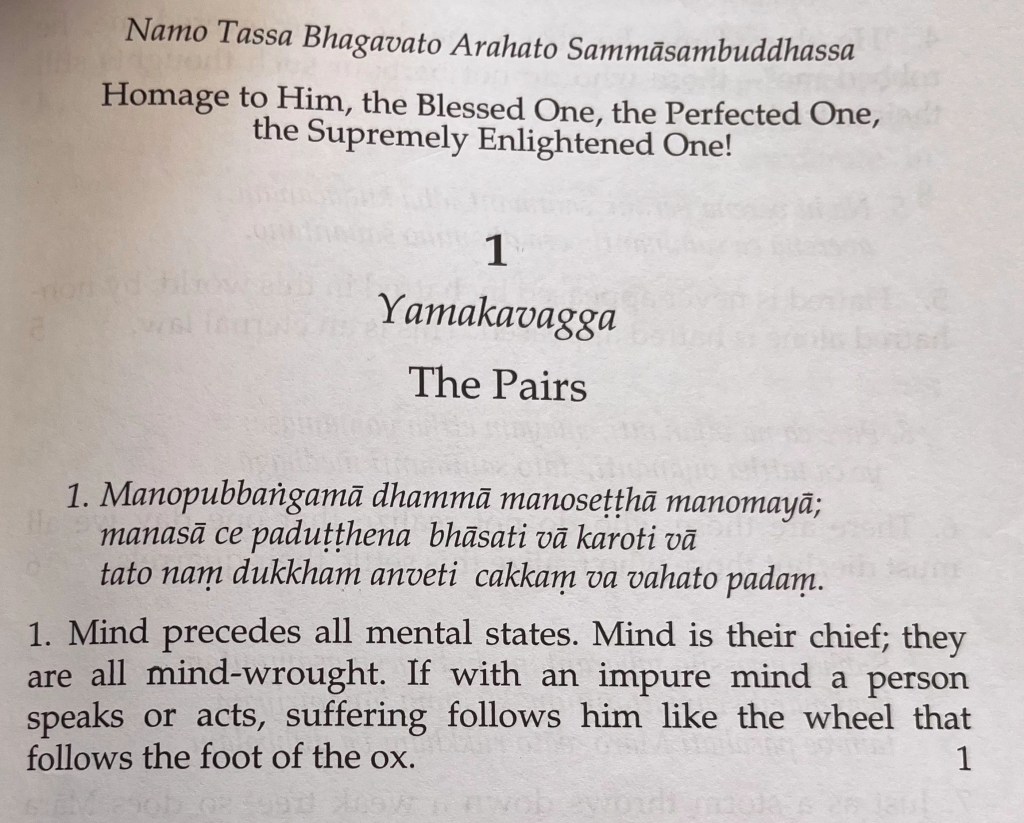
Manopubbangama dhamma manosettha manomaya; manasa ce padutthena bhasati va karoti va tato nam dukkham anveti cakkam va vahato padam.

Mind precedes all mental states. Mind is their chief, they are all mine wrought. If with an impure mind a person speaks or acts, suffering follows him like the wheel that follows the foot of an ox.

About two years ago I took on the task of trying to memorize the Dhammapada. I was, as may be obvious, unsuccessful. I am reminding the effort here partly due to a Dhamma talk I listened to by Thanissaro Bhikkhu in which he discussed the importance of all of the voices we fill our heads with. If mind is the chief, I want to sure that it is the voice of Lord Buddha and not Joe Rogan that surfaces in a moment of danger.

I will try to find the talk and post it here.

Posted by: Michael | 07/08/2023

Like a Sheep

This is one of the more “aspirational” posts. I hope to begin to embody the principle here outlined but because I am in no way qualified to teach the Dhamma (let alone conventional wisdom) and because pontificating did not but swell one’s pride.

Posted by: Michael | 11/24/2022

The Business Impact of Gratitude

https://www.forbes.com/sites/ericmosley/2019/11/27/the-business-impact-of-gratitude/

While many of us tend to view and express gratitude in relation to our personal lives, gratitude in the workplace is especially critical because it satisfies the higher psychological need to feel a sense of belonging to something greater than ourselves–to feel a sense of meaning at work.

Posted by: Michael | 08/01/2022

Morning meditation — Accept criticism.

Buddhism Now's avatarBuddhism now

‘Buddhist meditation: Accept criticism — those who try to burn space just tire themselves out! Listen, criticism is like nectar. ’

Zen master Hsuan Chuen

On the net, of course, it’s morning, afternoon, evening, or nighttime 😀 somewhere.

On our Twitter account, Buddhism Now @Buddhism_Now, most mornings we post a ‘morning meditation’ like the one above.

Click here for more teachings on Zen.


View original post

Posted by: Michael | 01/31/2022

Contemplate Death

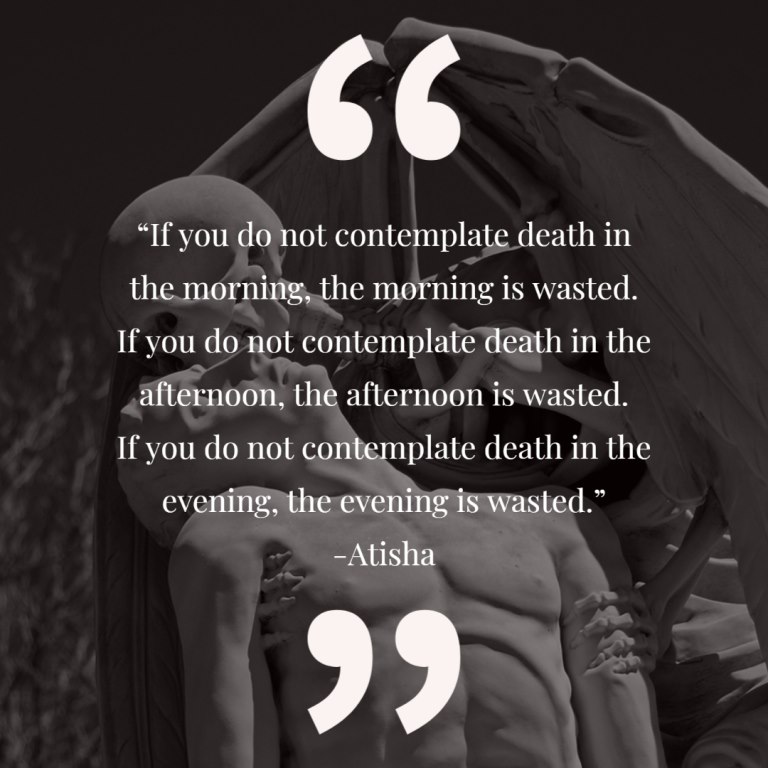
If you do not contemplate death in the morning, the morning is wasted. If you do not contemplate death in the afternoon, the afternoon is wasted. If you do not contemplate death in the evening, the evening is wasted.

Posted by: Michael | 01/19/2022

What We Have

It can be so easy to believe the voices that complain, criticize and fault find in our minds. It is so easy to casually hate the photos and posts of acquaintances and friends on FB and IG. But why? What do we gain?

What do I gain by begrudging my childhood friend her family’s vacation? Nothing but bitterness. I must, instead, train the mind to rejoice in the success of others until mudita becomes second-nature.

Posted by: Michael | 01/16/2022

Radical Responsibility

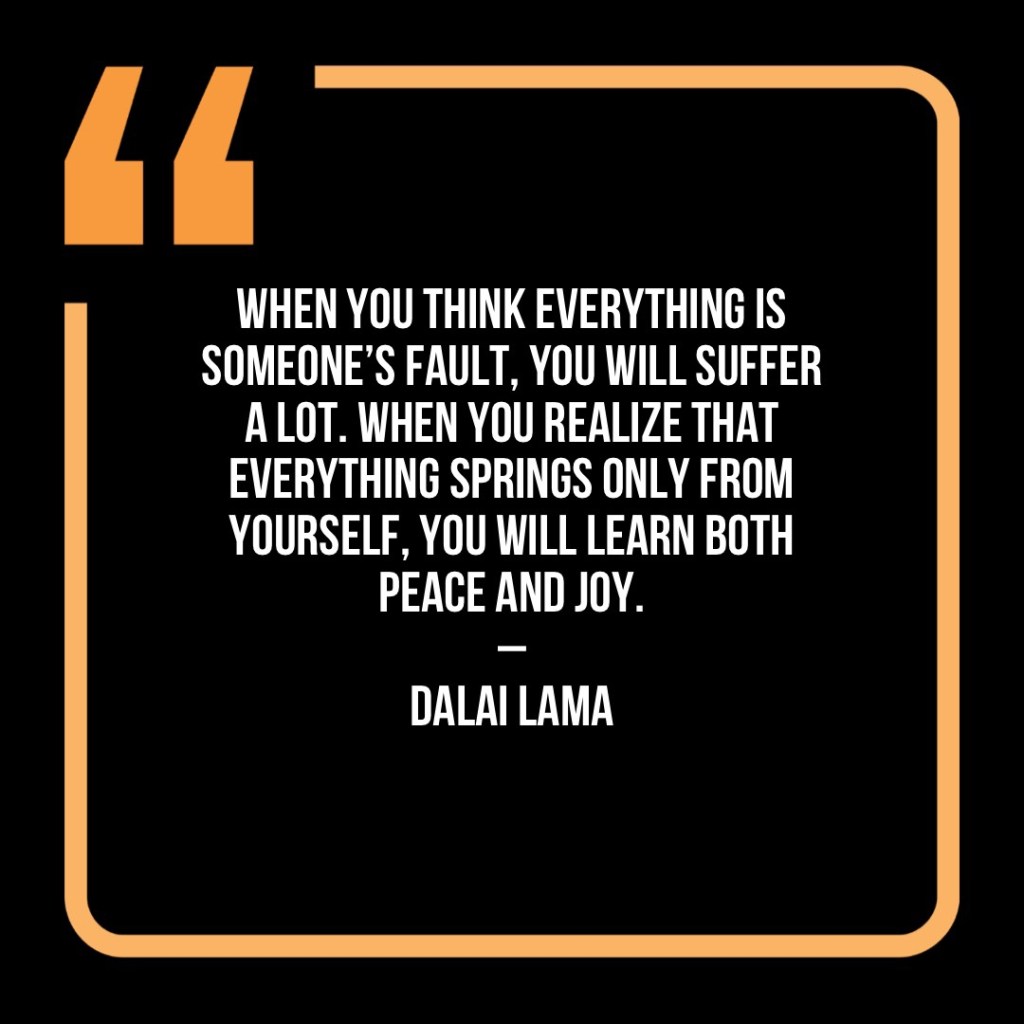
When you think everything is someone’s fault, you will suffer a lot. When you realize that everything springs only from yourself, you will learn both peace and joy. – Dalai Lama

« Newer Posts - Older Posts »

Categories

Brightening Futures of Zanzibar

Improving Lives through Generosity

Shillelagh Studies

A hub for the music, culture, knowledge, and practice of Irish stick-fighting, past and present.