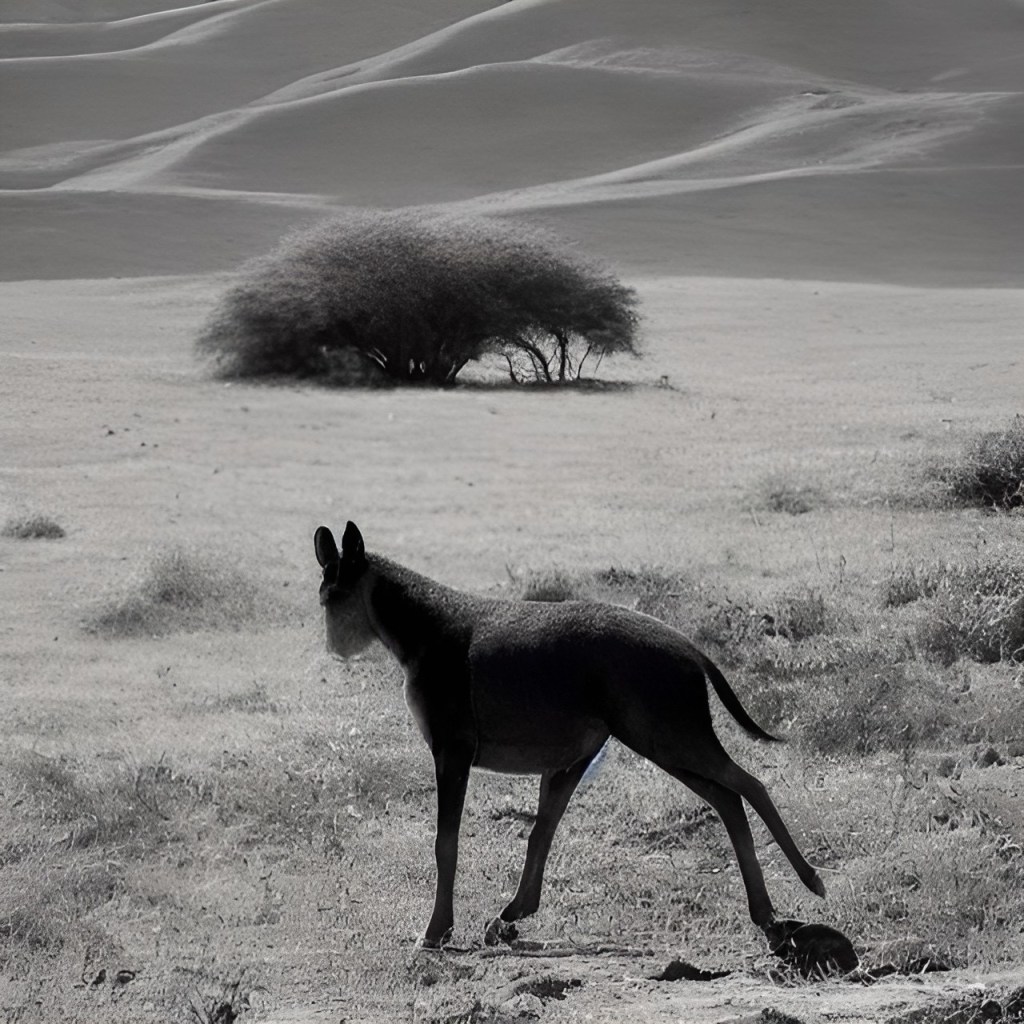
“Some animals have vassana, parami and a better character than some human beings. It is just that they happened to be reborn as an animal in this life, therefore they have to accept and endure the consequences of their kamma. We should not underestimate and look down on them as beings of a lower birth. They are simply receiving the consequences of certain kammic actions.”
Luang Pu Mun Bhuridatta
Accept and Endure
As frightening as this possibility is, anyone who takes the Lord Buddha at his word, knows rebirth in an animal womb is just one of the many possible outcomes in samsara. And, per the Dhamma, we know that this is the result of our own actions, it is the fruit of our kamma.
But, as Luang Pu points out, all is not lost provided we bear our lot with equanimity. We are the heirs of our kamma and it does us no good to lament and gnash our teeth at what we perceive is a cruel and unjust universe. In fact, it may do a lot of harm, if we don’t (to borrow Nietzsche’s term) learn to cultivate some amor fati and make the best of our situations.
Ataraxia and Upekkha
How we do that, however, is no easy task. In both Buddhist and Stoic thought there exists the concept of equanimity or imperturbability. In Hellenistic though this is termed ataraxia and in the Pali Canon as upekkha. These two conceptual constellations are quite similar but it must be said that a subtle difference does exist. It could be said that ataraxia is simply the state of imperturbability whereas upekkha is flavored by its sister concepts or states metta, karuna and mudita. Despite this difference of nuance, however, it is not so different in practice for those of us who are not yet arahants or Σοφοί (sophoi).
The point here is that, without putting too fine a point on it, we need to learn to cultivate a steady and even nature in the face of suffering and calamity whether it is befalling us or others. The next question is, of course, how we go about doing that.

How to Cultivate Ataraxia
The way we answer this question really depends on which philosophical perspective we take up. In other words,
“a crucial difference between ataraxia and apatheia is that ataraxia was an end goal for the Epicureans but not for the Stoics. The Stoics acknowledge this term, but prefer apatheia to describe a mindstate similar to ataraxia. In Stoicism, both ataraxia and apatheia are seen as a byproduct of virtue.”
Ataraxia, Apatheia & Eudaimonia
Here are some ideas about how we might begin to practice ataraxia or apatheia in our daily life (and tehy come from a fellow Buddhist blogger):
There are things we can do to encourage ataraxia in ourselves:
- Do what we do as best we can. Prepare what is in our control and don’t worry about what isn’t.
- Fully inhabit the present, not fearing the future or ruminating on the past.
- Practice simplicity. Seek tranquility (not thrills).
- Virtuous behavior, integrity; also, be generous in all situations.
- Avoid excessive grief. Grieve our losses but appreciate what we had.
How to Cultivate Upekkha
Ajahn SucittoUpekkhā is equanimity. The commentary likens this to the mood of a parent seeing that the child is now fully grown and can move around on its own. Then the parent senses: ‘He or she will find out what they need to find out. I still care for them, but now they can discover things for themselves.’ Upekkhā carries trust: it’s accompanied by the understanding that we all have to work with our own impulses, habits and attitudes. In this process, equanimity sustains the empathy that keeps the heart open and allows us to grow, rather than be perfect from day one. Or perfect at all: with empathy we begin to sense that ‘perfection’ is a form of ill-will. If you look for perfection, what you find is the critical and discontented mind. Instead of setting up an ideal, equanimity trusts that we can be who we are and go through what we need to in order to grow. Equanimity doesn’t sound that emotionally rich, but it is a very generous form of love. We all have to be with our fears and joys, our success and failure, our good and bad, and equanimity allows us to be present with the results of our actions so that we can acknowledge and investigate them. With equanimity we know what is good as just ‘that leads to a good place’ rather than ‘I am right.’ And what was unskilful can be known as ‘ that was unskilful’ rather than being agonized over. So we learn and see things in a way that doesn’t attach a big ‘I am’ to them. This is transformative.
Upekkhā is not indifference. So when one is going through a tough time, or seeing others struggling, rather than panicking or self-pitying or collapsing, equanimity maintains confidence in being empathically present. We this trust mindful presence of heart to have its effects. With some stuff, you just don’t know what to do; all you can do is be present with it, and just not keep adding more to it. This is upekkhā, to others as to oneself.
Good for You, Good for Others
Clearly, cultivating an attitude of equanimity in the face of calamity is good for oneself in that it allows you to take stock of your situation and act appropriately to get the best outcome you can manage. But, and this is a point I have only recently stumbled upon it is also good for others. More precisely, the perception of you being impassive and not quick to overreact to bad news or terrible situations makes you a safe place and a refuge to people who generally depend on you. If you are known to be someone who gets very upset when they hear bad news people will quite naturally try to shield you from it. In this way, especially in the case of children, our lack of stability and evenness can result in those in our care being indirectly hurt since they don’t feel they can come to us with their problems. If your teenager has an issue with their health but they’re afraid to tell you about it because of past reactions, what do you think might happen? If your six year old has been bullied or worse at school and they don’t tell you, what will be the result?
In short, whatever you call it, equanimity is one of those qualities that are always apropos. Whether you take it as the end of your practice as do the Epicureans, a preferred yet indifferent side effect of the pursuit of virtue as the Stoics or as a prosocial subject of meditation and an unconditioned, boundless state (appamañña vihara), rest assured that it is well worth your effort. Even if we never ascend to the heights of perfect equanimity we would do well at least begin to fake it.
Whether we’re born as a dog or a deva, we need to be able to cultivate the patience leading to equanimity. If we’re able to practice generosity, virtue and meditation the path to upekkha becomes much clearer but, even if we’re not, we need to take steps to become less apt to be disturbed and thrown off balance.


 Cattāri Brahmavihārā
Thank you for this wonderful post! Many Blessings to you!
By: Barbara on 12/11/2023
at 10:04 am